Here's what everyone tells you about dressing as you age: be careful. Don't try too hard. Avoid trends. Cover more. Play it safe.
And here's what I've observed in fifteen years of working with women over 40: that advice is exactly backwards.
The thing that ages women most isn't wearing the wrong trend or showing too much skin or trying too hard. It's the opposite. It's the retreat. The hiding. The slow surrender to invisibility disguised as "age-appropriate" dressing.
It's the choice to disappear before anyone can tell you that you should.
The Safety Trap
Somewhere around 40—sometimes earlier, sometimes later—many women start dressing defensively. Not consciously. It happens gradually, in small retreats that feel like sensible adjustments.
Colors get muted. Silhouettes get looser. Pieces that feel "risky" get passed over for pieces that feel "reasonable." The goal shifts from looking good to not looking bad. From being seen to not being noticed.
This feels like wisdom. Like maturity. Like knowing when to step back.
It's actually what ages you faster than any trend mistake ever could.
Because when you dress to disappear, you look like someone who's given up. Someone who's no longer in the game. Someone whose best years are behind her. That message lands harder than any hemline ever will.
Stylist's Note: The pattern I see over and over with new clients in their 40s and 50s is this: they're dressing for someone ten years older than they are. Not because they don't know better, but because they've absorbed the message that taking up space is no longer their right.
What Actually Ages You
Let me be specific about what happens when you dress defensively.
Shapeless silhouettes. When you hide your body in loose, unstructured clothing, you don't look smaller—you look older. The eye has nothing to anchor on. There's no definition, no shape, no energy. You read as someone who's given up on their body rather than someone at peace with it.
Muted everything. There's a version of neutral dressing that's sophisticated and intentional. And there's a version that's just... beige. When you strip all color, texture, and visual interest from your wardrobe because you're afraid of being "too much," you fade into the background. Literally. You become easy to overlook, which reads as irrelevant.
The "good enough" fit. This is the silent killer. Clothes that technically fit—they zip, they button, they cover what needs covering—but don't actually flatter. They're not too tight. They're not falling off. They're just... there. And that "just there" quality reads as not caring enough to get the details right.
Outdated proportions. You can wear classic pieces and still look dated if the proportions are wrong. The rise of your pants. Where your jacket hits. The width of your lapels. These details whisper "2008" even when the pieces themselves are timeless.
The comfort uniform. When you default to the same easy pieces every day because getting dressed feels exhausting, you stop experimenting. You stop evolving. You freeze in place. And frozen is old.
The Counterintuitive Truth

The women I know who look ageless into their 50s, 60s, and beyond? They didn't get more careful as they aged. They got more intentional.
They wear color—bold color, considered color, color that makes their skin glow instead of shrinking from attention.
They wear structure—pieces that define their shape rather than obscure it.
They wear interest—texture, pattern, statement pieces that make you look twice.
They dress like they still matter. Like they're still in the room. Like they expect to be seen.
And that expectation—that refusal to preemptively fade—is what keeps them looking vital.
A woman in her late 50s came to me after years of what she called "appropriate" dressing. Lots of navy. Lots of black. Nothing too tight, nothing too bright, nothing too anything. She was invisible and exhausted by it.
We rebuilt her wardrobe around rich jewel tones that lit up her coloring. Fitted blazers that showed she had a waist. Interesting jewelry that drew the eye. Statement pieces she'd been afraid to wear for years.
Her husband's first comment: "You look ten years younger."
She hadn't changed her face. Her body. Her hair. She'd changed her message.
The Real Age Tells
If you want to know what actually ages you in clothing, look at these:
Poor fit ages you. Always. Without exception. A $50 dress that fits perfectly will look younger than a $500 dress that doesn't. Because fit signals that you're paying attention. That you care. That you're current with your own body. Poor fit signals that you've stopped updating your self-image.
Playing it safe ages you. Safety reads as resignation. As giving up. As accepting that your most interesting days are over. Women who look vibrant at any age are women who still take risks—small ones, considered ones, but risks nonetheless.
Trying to hide ages you. When you dress to conceal parts of yourself—your arms, your stomach, your thighs—the hiding itself becomes visible. People see the avoidance. They see the shame. They see someone uncomfortable in their own skin, which reads as older than any bare arm ever will.
Being behind ages you. Not "behind" on trends—that's different. Behind on proportions. Behind on what fits your current body. Behind on updating pieces that have quietly become dated. Behind on the shift from who you were to who you are now.
Dressing for the wrong life ages you. If your wardrobe is built for a life you no longer live—corporate suits for a woman who's been freelancing for five years, casual clothes for a woman who's now in leadership positions—you look out of sync. And out of sync reads as stuck.
Pro Tip
The question isn't "Is this too young for me?" The question is "Does this make me look like someone who's still engaged with life?" Those are very different filters—and they lead to very different wardrobes.
The Energy Principle
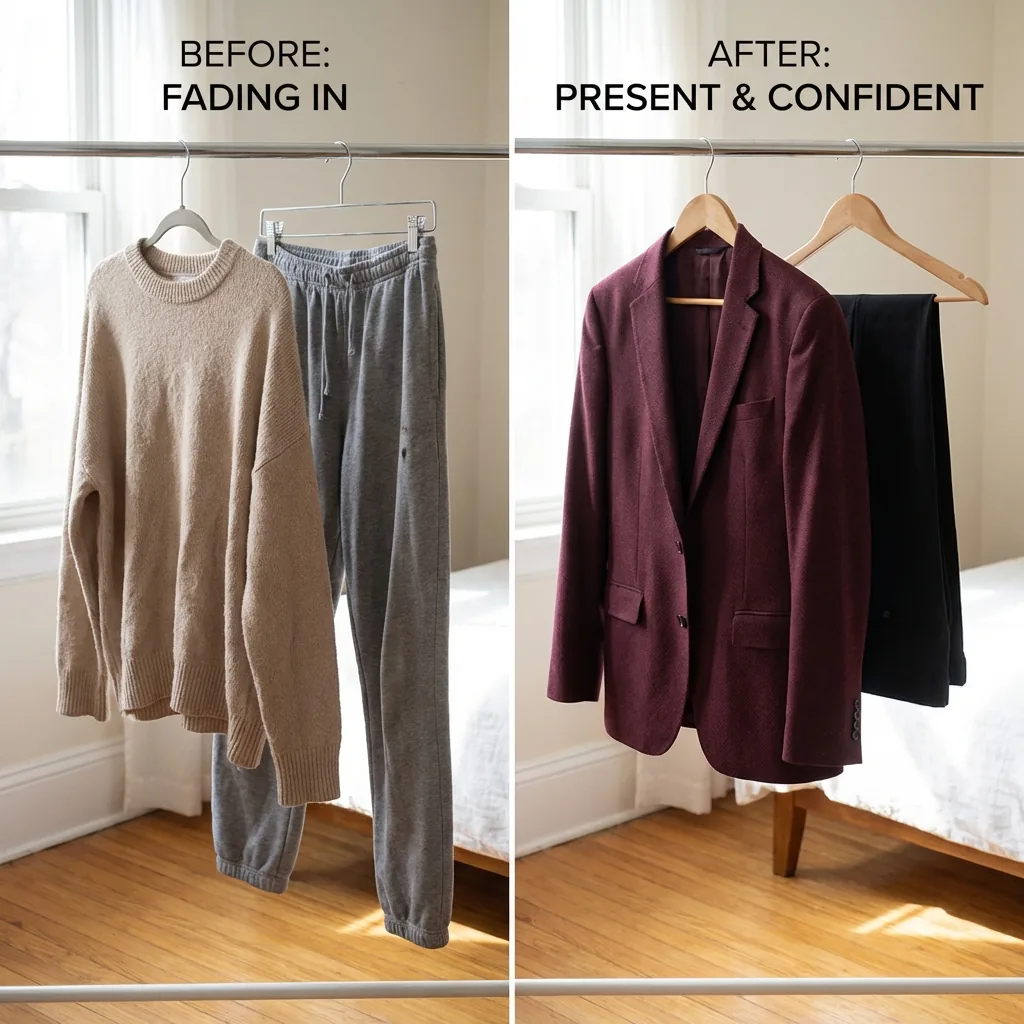
Here's the thing nobody talks about: clothes carry energy. Not in a woo-woo way—in a very practical, visual way.
Clothes that fit well and are chosen with intention have a kind of aliveness to them. They look like they belong on a person who matters.
Clothes that are chosen defensively—to hide, to blend, to avoid criticism—have a deadness to them. They look like they're waiting to be overlooked.
That energy reads instantly. Before anyone consciously evaluates your outfit, they've registered whether you look vital or faded. Present or retreating. In the game or out of it.
This is why the "safe" choice often backfires. You chose it because you didn't want to draw attention. But what you actually communicated was that you don't expect to be worth attention. And that message ages you far more than any bold choice would.
What This Looks Like In Practice
I'm not suggesting you wear whatever you want with no consideration of context. I'm suggesting you stop using age as a reason to make yourself smaller.
Instead of loose, try draped. There's a difference. Loose hangs off you like you're hiding. Draped follows your body with some ease, suggesting shape without clinging. It's sophisticated, not sloppy.
Instead of muted, try tonal. If you're not ready for bold color, work with a rich, cohesive palette. Layers of cream and camel and ivory. Deep burgundies and navies. Color that has depth rather than absence.
Instead of safe, try intentional. Every piece should be a choice, not a default. When you put something on, you should be able to articulate why. "Because it was there and it fit" isn't a reason—it's a surrender.
Instead of hiding, try highlighting. Whatever you like about yourself—your collarbones, your waist, your shoulders—build your outfit around that. Draw the eye to your strengths rather than desperately trying to distract from perceived weaknesses.
Instead of frozen, try evolving. Your style should be a living thing, updating as you do. That doesn't mean chasing trends. It means staying curious. Trying new proportions. Experimenting with pieces you'd normally skip. Asking "Why not?" instead of "Why?"
The Permission Slip
The truth is, many women don't need style advice. They need permission.
Permission to take up space. Permission to be seen. Permission to wear color after 40, or fitted clothes after 50, or statement pieces after 60. Permission to care about how they look without apologizing for vanity.
So here it is: You're allowed. You're allowed to look good. You're allowed to try. You're allowed to dress like you still matter, because you still do.
The women who look ageless aren't women who stopped caring about their appearance. They're women who kept caring. Who kept investing. Who refused the slow fade into invisibility that our culture expects.
They understood something fundamental: age isn't what makes you look old. Giving up is what makes you look old.
And getting dressed every day like you're still in the game—like you expect to be seen and you're ready for it—is the most powerful anti-aging strategy you'll ever find.
Ready to stop retreating and start dressing with intention? Our Outfit Engine Method → helps you build a wardrobe that announces you're still here—and you're not going anywhere.