Every morning, you stand in front of your closet and have a conversation.
You don't realize you're having it. It happens so fast—a split-second negotiation between what you want to wear and what you think you should wear. Between the dress that makes you feel something and the practical option that won't raise eyebrows.
There's someone in your head, weighing in on every choice. Vetoing the bold option. Steering you toward safe. Whispering that you're trying too hard, or not trying enough, or that people will think something about you if you wear that.
You think you're dressing for yourself.
You're not. You're dressing for them.
The Audience That Isn't There
Here's the thing about getting dressed: most women aren't choosing clothes in a vacuum. They're choosing clothes in front of an imaginary panel of judges.
Maybe it's your mother. Her voice from twenty years ago, commenting on your weight or your hemline or your "phase." Every time you reach for something that might draw attention to your body, you hear her. So you don't reach.
Maybe it's an ex. Someone who made you feel like you were too much or not enough. Someone who raised an eyebrow at a particular dress and you never forgot it. Now that eyebrow appears every time you consider something similar.
Maybe it's coworkers, or other moms, or the women at your gym. Some collective jury you've invented, ready to convict you of trying too hard. Or not caring enough. Or not fitting in. Or standing out.
Maybe it's no one specific—just a vague, oppressive sense that someone is watching. Someone is keeping score. Someone will notice if you get it wrong.
This audience isn't real. But you dress for them anyway.
How to Identify Your Ghost
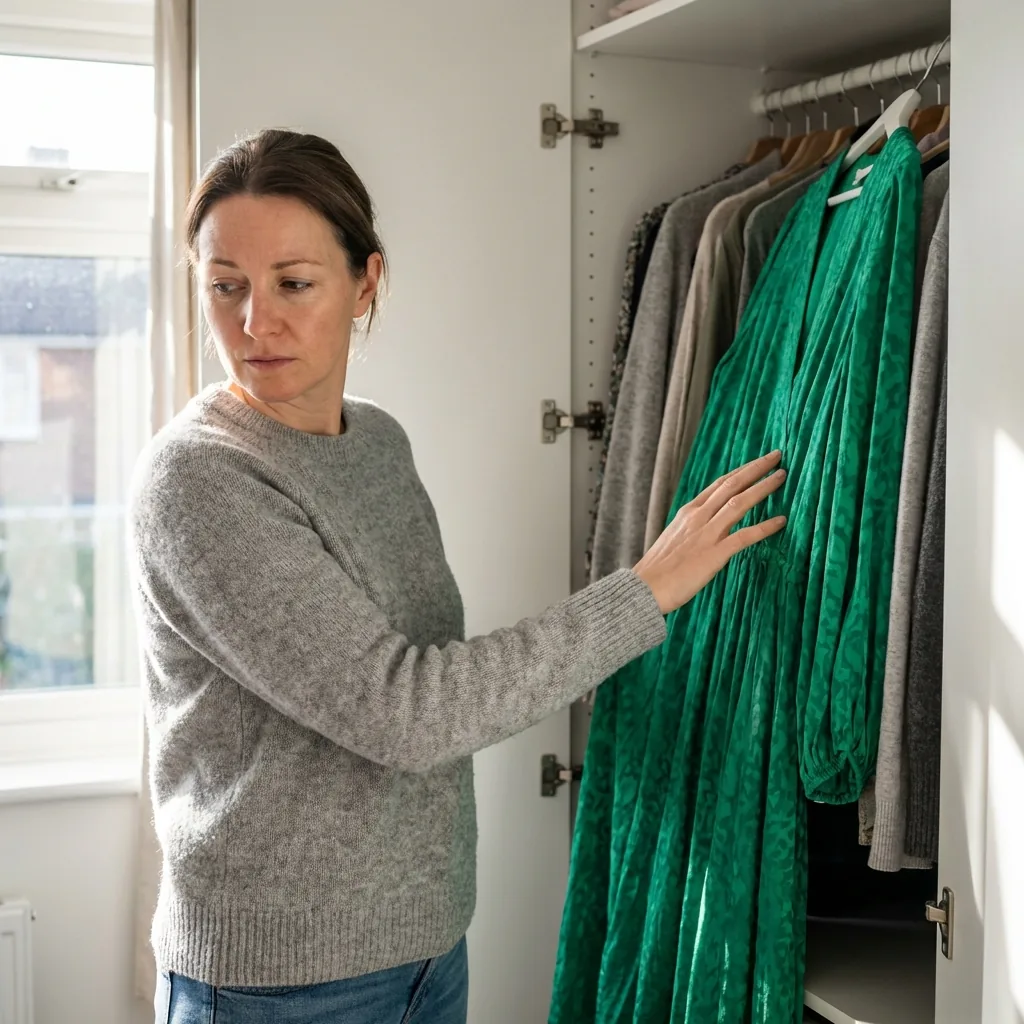
Most women have never consciously identified who they're dressing for. The influence is so embedded it feels like personal preference. But there's a way to find out.
Think about the last time you wanted to wear something and talked yourself out of it.
Not because of weather. Not because of practicality. Because of some vague sense that it was "too much" or "not you" or "what would people think."
Now ask: whose voice was that?
Was it your mother's? A critical friend's? A past partner's? Was it the imagined judgment of women at school pickup? The hypothetical stares from strangers?
When you trace that voice back to its source, you usually find someone specific. Someone whose opinion you absorbed so deeply that it now sounds like your own inner wisdom.
It's not wisdom. It's a ghost.
Stylist's Note: In my work with clients, this is the first conversation we have. Not about color or fit or body type—about who they're really trying to please. Until you identify the ghost, you can't stop dressing for them.
The Usual Suspects
Certain ghosts show up again and again.
The Critical Mother. She meant well. She was trying to protect you from judgment, criticism, being noticed for the wrong reasons. But somewhere along the way, you internalized that your body needed managing. That your instincts were wrong. That safety was better than expression. Now her voice shows up every time you consider something that might attract attention.
The Ex Who Commented. It might have been one sentence, years ago. "That's not really you." "That color is unflattering." "You're not really going to wear that, are you?" One comment. But it landed so deep that you still dress around it, avoiding entire categories of clothing because someone once made you feel small for wearing them.
The Imaginary Jury. This isn't a specific person—it's the aggregate judgment of everyone you've ever worried about. Other women. Random strangers. An anonymous "they" who will notice your flaws, clock your fashion crimes, and whisper about you. This jury exists entirely in your head, but you answer to it daily.
The Woman You're Supposed To Be. This ghost is aspirational. You dress for the polished professional, the effortless mother, the woman with everything together. Someone you've never actually been but feel you should be. So you buy her clothes. And they hang in your closet, unworn, because they're costumes for a character you're not playing.
Your Former Self. Maybe you're dressing for who you were at 25—the body you had, the life you lived, the identity you've outgrown. Or maybe you're dressing for the version of you before the divorce, before the kids, before everything changed. Either way, you're choosing clothes for someone who doesn't exist anymore.
Note
The next time an outfit feels wrong, ask yourself: wrong according to who? The answer reveals more about your style blocks than any quiz ever could.
What Dressing For Yourself Actually Means
Here's the uncomfortable truth: many women have never actually dressed for themselves. They've dressed for approval. For safety. For belonging. For not being noticed in the wrong way.
When I ask clients what they want to wear—not what they think they should wear, but what actually appeals to them when they're honest—many of them don't know. That muscle has atrophied from disuse. They've spent so long dressing for ghosts that they've lost access to their own preferences.
Dressing for yourself means:
Checking in with your body's response. When you hold up a piece, your body knows before your mind does. There's a yes—an opening, an excitement, a spark. Or there's a no—a contraction, a heaviness, a should. Learning to trust the yes, even when the ghost objects, is the first step.
Wearing what makes you feel something. Not what makes you feel invisible. Not what makes you feel appropriate. What actually generates a positive feeling when you wear it. Energy. Pleasure. Confidence. Something.
Giving yourself permission to evolve. Your preferences aren't fixed. Who you were five years ago doesn't get to dictate who you are now. Dressing for yourself means staying current with yourself—noticing when old patterns no longer fit and giving yourself permission to change.
Accepting that some people won't like it. This is the hardest part. When you start dressing for yourself, you will occasionally get reactions. Raised eyebrows. "That's different." Comments that remind you why you used to stay safe. You have to decide that your own experience of getting dressed matters more than someone else's opinion of seeing you dressed.
The Firing Ceremony
At some point, you have to fire the ghost.
Not ignore them. Not override them. Consciously, deliberately fire them from their position on your internal style committee.
This sounds silly. It works.
A client of mine—a woman in her early 50s—had spent her entire adult life dressing to avoid her mother's criticism. Her mother had been dead for ten years, but the voice was still there, still vetoing anything that showed her body, anything that suggested she thought she looked good, anything that wasn't conservative and careful and safe.
We did an exercise. She wrote a letter to her mother's voice—not her actual mother, who she loved, but the critical presence that still showed up in her closet every morning. She thanked it for trying to protect her. She acknowledged the years of service. And then she formally released it from duty.
It sounds dramatic. She cried through the whole thing. And then she went out and bought a red dress she'd been wanting for years.
You don't have to write a letter. But you do have to consciously recognize that the voice isn't you—and decide that it no longer gets a vote.
Building a New Relationship With Your Closet
Once you've fired the ghost, the real work begins: figuring out what you actually like.
This is harder than it sounds. When you've spent years filtering every choice through someone else's expectations, your own preferences become buried. Accessing them takes practice.
Start with noticing. Before you dismiss anything as "not me," ask yourself: not me according to who? Sometimes the things we've ruled out are exactly what we'd choose if we trusted ourselves.
Experiment in low-stakes contexts. Wear something different to the grocery store. Try a new silhouette for a casual weekend. Give yourself space to play without the pressure of public judgment.
Pay attention to compliments you resist. When someone says "I love that on you" and your first instinct is to deflect or disagree, pay attention. Your resistance often points to places where you've internalized external criticism over your own experience.
Ask different questions. Instead of "Is this appropriate?" ask "Does this feel like me?" Instead of "What will people think?" ask "How do I feel wearing this?" The shift from external to internal evaluation is the whole game.
What Changes When You Dress For Yourself

When you stop dressing for the ghost and start dressing for yourself, something shifts.
Getting dressed stops being an exercise in damage control—managing perceptions, avoiding criticism, playing it safe—and starts being an expression. Of who you are today. Of what you want to project. Of how you want to feel moving through the world.
The exhaustion lifts. The constant second-guessing quiets. The closet stops feeling like a minefield and starts feeling like a resource.
You stop dressing to disappear or to fit in or to avoid attention. You start dressing to show up. To take up space. To be seen as you actually are, not as some careful, edited version designed to preempt criticism that might never come.
The woman you're dressing for is finally you.
And when you look in the mirror, you stop asking "What will they think?" and start asking something better:
"Does this feel like me?"
If the answer is yes, nothing else matters.
Ready to fire your ghost and build a wardrobe that's actually yours? Our styling process → helps you cut through the noise of external expectations and dress for the person who actually matters: you.