She stood in front of her closet, crying.
Not because she had nothing to wear—the closet was full. Beautiful things. Expensive things. Things that fit a woman she used to be.
The corporate suits from before she left her job to freelance. The wife-and-mother uniform from before the divorce. The colorful pieces from before the grief made everything feel too loud. The pre-baby clothes she'd kept for fifteen years, still hoping.
All of it hanging there. None of it hers anymore.
I see this more than almost anything else in my work: women standing at the closet of a former self, trying to dress a person who no longer exists.
The Identity Gap
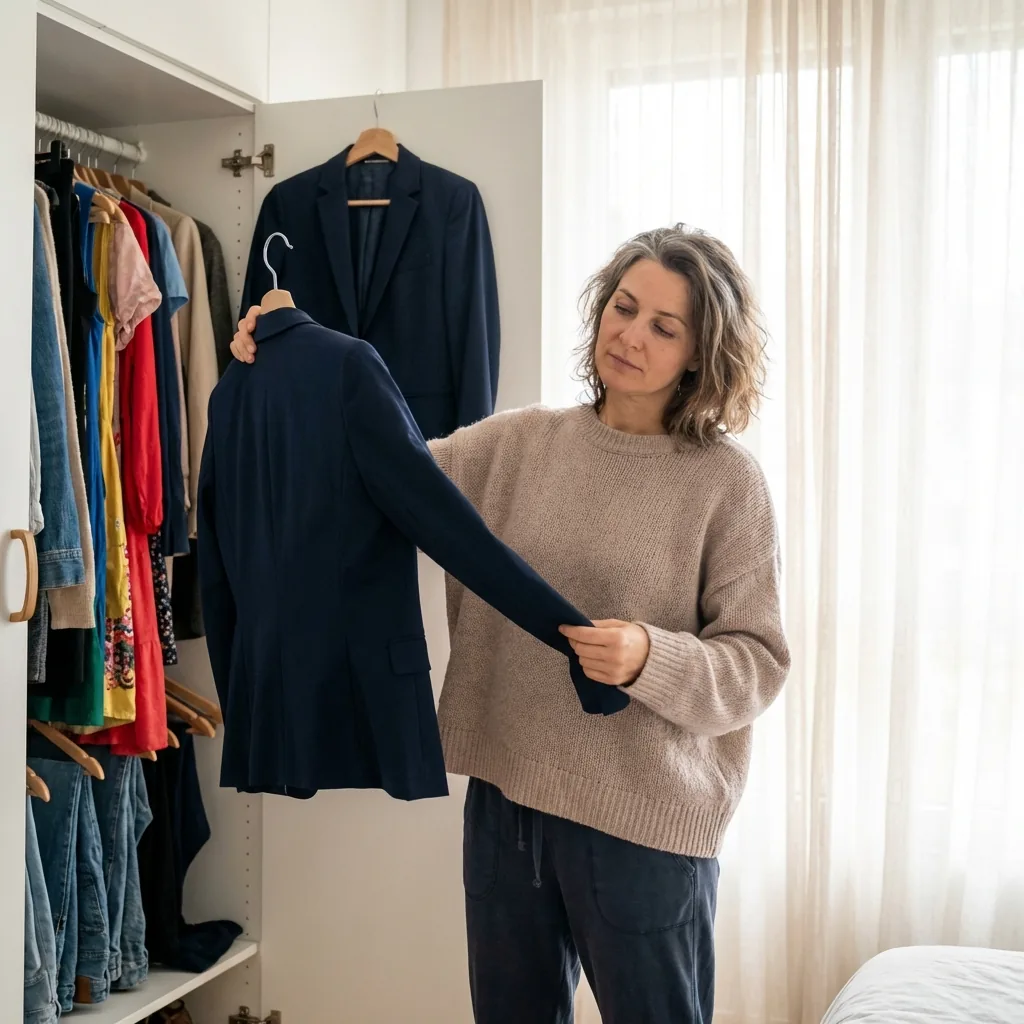
Major life transitions create a strange kind of displacement. The external facts change—you're divorced now, or retired, or fifty pounds heavier, or living in a different city, or raising teenagers instead of toddlers—but your internal sense of self hasn't caught up.
You still feel like the person you were. Until you open your closet. And then the gap becomes unbearable.
Every piece belongs to a version of you that existed in a different context. The blazers from when you were climbing the corporate ladder. The date-night dresses from when you were still married. The workout clothes from when exercise was part of your identity. The ambitious pieces from when you believed you'd become a certain kind of person.
Your closet becomes a graveyard of selves. And getting dressed becomes an excavation of everything that's changed.
Why This Happens
Your wardrobe isn't just cloth and fabric. It's an archive of identity.
Every piece you bought was a statement about who you were at the moment of purchase. Your role. Your aspirations. Your body. Your values. Your circumstances.
When those things change, the clothes stop working. Not because they don't fit anymore—though sometimes that's true too—but because they represent someone you no longer are.
The suit feels wrong because you're not that executive anymore. The floral dress feels wrong because you're not that wife anymore. The bold pieces feel wrong because you're not that confident person anymore. Or the opposite—the safe pieces feel wrong because you're no longer willing to be invisible.
The gap isn't a fashion problem. It's an identity problem that shows up in your closet every morning.
Stylist's Note: When clients come to me during transitions, I never start with what to buy. I start with who they're becoming. Because you can't dress a person you haven't defined yet.
The Kinds of Transitions
Different transitions create different kinds of closet crises.
Divorce or relationship ending. Suddenly you're dressing for yourself, and you realize you'd been dressing around someone else's preferences for years. You don't know what you like anymore. Or you know exactly what you like and feel guilty claiming it.
Career change. You leave the corporate world and have no idea how to dress for something less structured. Or you enter a professional role and your creative wardrobe no longer fits the context. The external costume no longer matches the internal role.
Body changes. Pregnancy. Illness. Weight gain or loss. Aging. Your body becomes unfamiliar, and the clothes that used to work become daily reminders of what's different. You're caught between mourning the old body and accepting the new one.
Empty nest. The mother identity that structured your wardrobe for two decades suddenly needs revision. You're still a mother, but that's no longer the center of your daily life. You don't know who you dress as now.
Loss. After significant loss—death of a loved one, end of a career, dissolution of a dream—everything feels wrong. Colors are too bright. Style feels too frivolous. The effort feels pointless. Your closet reflects someone who cared about things you can't currently access.
Relocation. New city, new climate, new social context, new expectations. The wardrobe that worked in your old life is suddenly completely wrong for your new one.
The Three Responses
When identity shifts and your wardrobe no longer fits, most women respond in one of three ways:
Clinging. You keep wearing the old clothes, pretending nothing has changed. The suit jacket from your corporate job, even though you work from home now. The size 6 jeans in the back of your closet, even though you haven't worn them in five years. The pieces from your marriage, even though it's over. Clinging keeps you stuck in an identity that no longer exists.
Avoiding. You stop caring about how you look. Sweats become the uniform. Getting dressed feels too painful, so you don't really do it. This feels like acceptance but it's actually retreat—a refusal to integrate the change because engagement hurts too much.
Overcompensating. You throw everything out and buy a completely new wardrobe, trying to force a new identity into existence through clothes. This sometimes works, but often creates another closet full of clothes that don't fit—this time, because they fit an aspirational self rather than your actual emerging self.
None of these approaches solve the problem. Because the problem isn't the clothes.
Note
If getting dressed has become the hardest part of your day, you're not being dramatic. Your closet has become the physical location of an identity crisis. That's a real thing to deal with.
The Grieving Period
Here's something nobody tells you: there's a grieving period for your old self, and it happens in front of your closet.
Every piece that no longer fits or works represents a loss. Not just a fashion loss—a life loss. And that needs acknowledgment before you can move forward.
It's okay to mourn the body you had before illness or children or age. It's okay to mourn the career identity those blazers represented. It's okay to feel grief about the marriage that those dresses once belonged to.
The closet clearout everyone recommends? It's not about organization. It's about letting go. And letting go takes time.
You don't have to do it all at once. You can take pieces out gradually, as you're ready. You can keep things that carry important memories even if you'll never wear them. You can allow the process to be slow and imperfect.
What matters is that you eventually create space for who you're becoming, rather than staying trapped in who you were.
Building the Bridge
The way forward isn't to immediately define your new identity and build a wardrobe around it. It's to build a bridge.
Bridge pieces are clothes that work while you're in transition—not commitments to a new identity, just functional items that help you get through each day without the closet becoming a crisis.
Bridge pieces are:
- Simple, high-quality basics in colors that work for you
- Comfortable but put-together (not sweats, but not demanding either)
- Flexible for multiple contexts
- Kind to your current body, whatever that looks like
- Easy to mix with whatever you keep from before and whatever you'll add later
Bridge pieces give you permission to be in transition. You don't have to have it all figured out. You don't have to commit to a new style when you don't know who you are yet. You just need enough functional pieces to get dressed without crying.
The Emergence Process
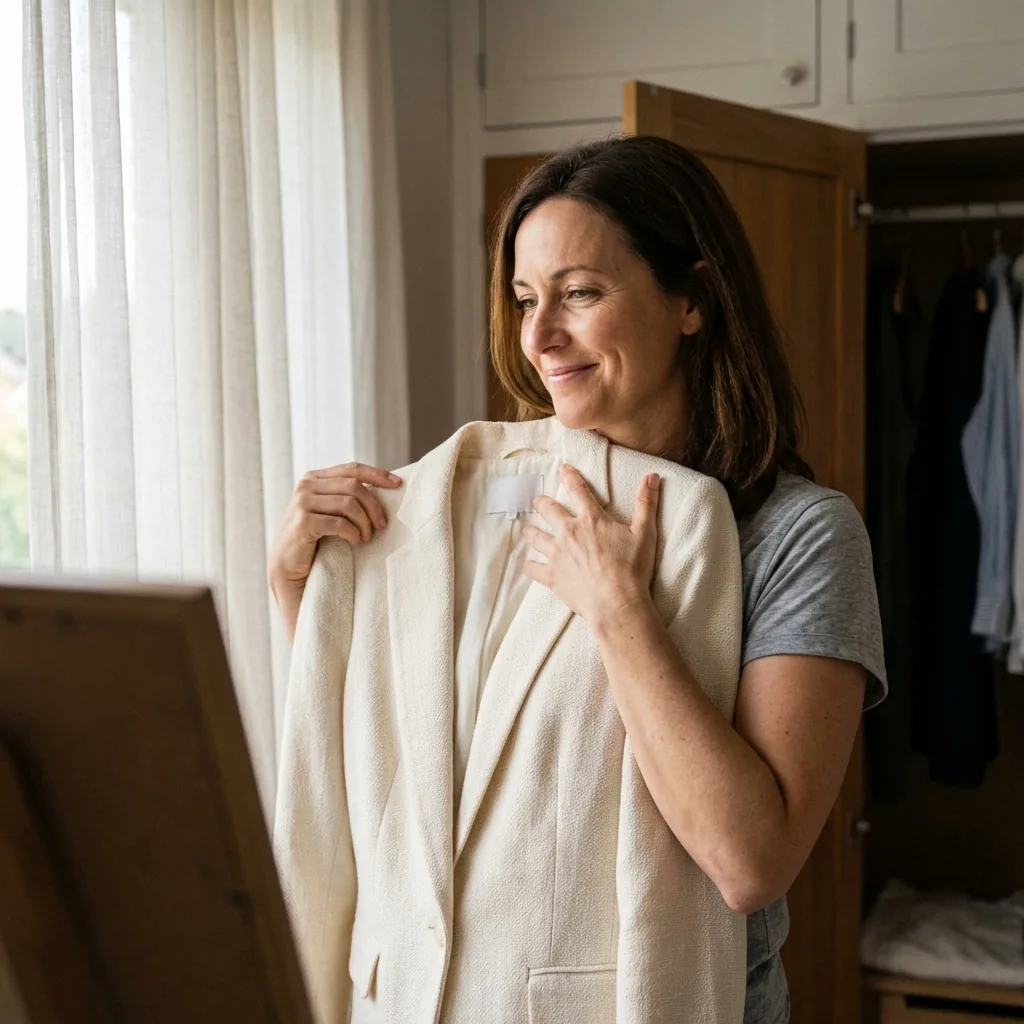
New identities don't arrive fully formed. They emerge gradually, through experimentation and discovery.
Once you have bridge pieces in place, you can start exploring. Not committing—exploring.
Try on identities like costumes. Wear something you never would have worn before. See how it feels. Not whether other people approve—how it feels in your body. Does it generate energy or deplete it? Does it feel like possibility or costume?
Follow the resonance. When something feels right—when a piece makes you stand up straighter or walk differently or smile at your reflection—pay attention. That resonance is your emerging self telling you something.
Release the old rules. Whatever beliefs you had about what you could and couldn't wear, what was appropriate for your role or body or age—those rules belonged to your old identity. They may not apply anymore. Question everything.
Allow contradiction. During transition, you might feel drawn to pieces that seem to contradict each other. That's fine. You're figuring out who you are. Contradiction is part of the process.
A woman I worked with came to me after leaving a twenty-year marriage. She'd dressed for her ex-husband's preferences the entire time—conservative, muted, invisible. She had no idea what she actually liked.
We spent three months exploring. She'd send me photos of things that caught her eye, no judgment about whether they were "her" or not. Gradually, patterns emerged. She was drawn to structure, to saturated color, to pieces that took up space. The opposite of everything she'd worn for two decades.
Her new wardrobe didn't look like a reaction against her marriage. It looked like a woman finally discovering who she was.
The Integration Point
Eventually, the bridge period ends. Your emerging identity becomes clear enough to build around.
This doesn't mean you have it all figured out. You won't. It means you've developed enough self-knowledge to make intentional choices rather than just getting through each day.
You know what makes you feel like yourself. You know your colors, your silhouettes, your style language. You know how you want to show up in this new chapter.
And your wardrobe becomes a tool for that showing up—not a graveyard of who you were, but an expression of who you're becoming.
The woman who cried in front of her closet? Six months into the work, she told me something I've never forgotten:
"For the first time in my life, getting dressed doesn't feel like choosing a costume. It feels like deciding how to show up as myself."
That's the integration point. When your clothes stop representing roles you play or people you're pretending to be, and start being simply an expression of who you are today.
Not who you were. Not who you think you should be. Who you actually are, right now, in this version of your life.
The closet stops being a museum. And becomes a mirror.
Going through a transition and feeling lost in your closet? Our Outfit Engine Method → is designed exactly for this—helping you build a wardrobe that meets you where you are and supports who you're becoming.